
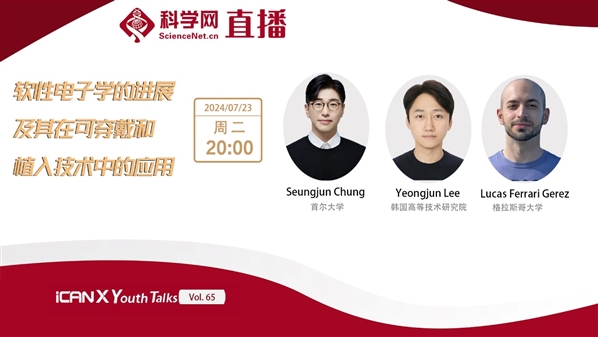
直播時間:2024年7月23日(星期二)20:00—22:00
直播平臺:

科學網APP
(科學網微博直播間鏈接)
https://weibo.com/l/wblive/p/show/1022:2321325059291315830986

科學網微博

科學網視頻號
【直播簡介】
北京時間7月23日晚八點,iCANX Youth Talks第六十五期邀請到了首爾大學Seungjun Chung、 韓國高等技術研究院Yeongjun Lee、格拉斯哥大學Lucas Ferrari Gerez三位教授主講,瑞士聯邦材料科學實驗室Sukho Song擔任研討嘉賓,格拉斯哥大學Haotian Chen教授擔任主持人,期待你一起加入這場知識盛宴。
【嘉賓簡介】

Seungjun Chung
首爾大學
Self-powered skin-mountable electronics
[ABSTRACT]
Printing technologies have attracted tremendous attention in the realization of customized soft electronics due to their advantages, such as non-vacuum, low-temperature, and non-contact processability. In this presentation, I would like to present our recent results of printing solid-state elastic conductors into self-supporting three-dimensional (3D) geometries that promise the design diversity of soft electronics, enabling complex, multifunctional, and tailored human-machine interfaces. Our omnidirectional printing strategies achieve superior viscoelastic properties that provide the structural integrity of printed features, and pseudoplastic and lubrication behaviors that allow great printing stability simultaneously. Freestanding, filamentary, and out-of-plane 3D geometries of intrinsically stretchable conductors are directly written, achieving a minimum feature size <80 μm and excellent stretchability >150%. To illustrate the feasibility of our approach, we demonstrate skin-mountable electronics that visualize temperature on a matrix-type stretchable display based on omnidirectionally printed elastic interconnects. In addition, I would like to introduce our recent efforts to realize high-performance soft thermoelectric generators (TEGs) which facilitate achieving high energy conversion efficiency in TEGs capable of conforming to 3D surfaces of heat sources simultaneously. Softening of TEGs allows conformal contact with arbitrary-shaped heat sources, especially in our body, which offers an opportunity to realize self-powered skin-mountable applications.
打印技術因其非真空、低溫和非接觸式加工能力等優勢,在實現定制化軟電子設備方面引起了巨大關注。在本次演講中,我想介紹我們最近打印固態彈性導體到自支撐三維(3D)幾何形狀的結果,這為軟電子設備的設計多樣性提供了承諾,使得復雜、多功能和定制化的人機界面成為可能。我們的全方位打印策略實現了卓越的粘彈性特性,為打印特征提供了結構完整性,并且同時允許了偽塑性和潤滑行為,從而實現了極高的打印穩定性。直接書寫了本質上可拉伸導體的自由懸掛、絲狀和離平面3D幾何形狀,實現了最小特征尺寸小于80微米和超過150%的卓越拉伸性。為了說明我們方法的可行性,我們展示了基于全方位打印彈性互連的皮膚可穿戴電子設備,該設備在基于矩陣型可拉伸顯示屏上可視化溫度。此外,我想介紹我們最近為實現高性能軟熱電發電機(TEGs)所做的努力,這些TEGs有助于在同時適應熱源的3D表面的情況下實現高能量轉換效率。TEGs的軟化允許與任意形狀的熱源進行共形接觸,特別是在我們的身體上,這為實現自供電的皮膚可穿戴應用提供了機會。
[BIOGRAPHY ]
Seungjun Chung is an Associate Professor in the School of Electrical Engineering at Korea University, Korea. He received his Ph.D. degree in Dept. of Electrical Engineering and Computer Science (EECS) from Seoul National University in 2012. Then, he joined Prof. Subramanian’s group in Dept. EECS, University of California, Berkeley as a postdoctoral researcher from 2013 to 2016. He was a Principle Research Scientist at Korea Institute of Science and Technology (KIST) from 2017 to 2023. He has published over 80 papers in numerous high-impact journals, including Nature Electronics, Nature Communications, Advanced Materials, Advanced Energy Materials, etc. Dr. Chung was a KIST Young Fellow and expert in technology level evaluation, Ministry of Science and ICT, Korea. His current research interests are in printed semiconductor devices and their physics, manufacturing of soft electronics and energy devices.
Seungjun Chung是韓國大學電氣工程學院的副教授。他于2012年在韓國首爾國立大學電氣工程與計算機科學系獲得了博士學位。然后,他于2013年至2016年在加州大學伯克利分校的Subramanian教授組作為博士后研究員。他從2017年到2023年是韓國科學技術研究院(KIST)的首席研究科學家。他在包括Nature Electronics、Nature Communications、Advanced Materials、Advanced Energy Materials等在內的多個高影響力期刊上發表了80多篇論文。Chung博士是KIST青年研究員,也是韓國科學技術信息通信部的技術等級評估專家。他目前的研究方向是打印半導體器件及其物理、軟電子和能源設備的制造。
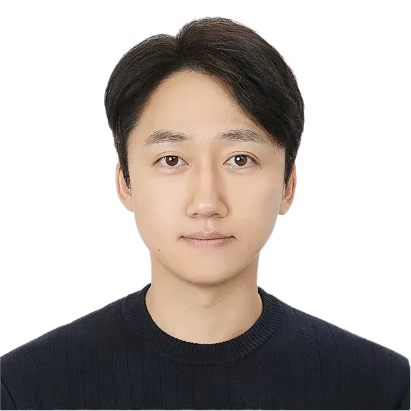
Yeongjun Lee
韓國高等技術研究院
Soft artificial nerves for next-generation low-power neuroprosthetics
[ABSTRACT]
In modern society, the acceleration of aging and industrialization has led to a rise in brain and neural disorders, including motor neuron degeneration and spinal cord injury. These conditions significantly affect both patients lives and society. Neuroprosthetics have developed as a solution to help patients regain lost functions by replacing damaged nerves. While current neuroprosthetic devices made great advances in rehabilitation, their rigid digital components and computing systems limit their long-term usability in daily activities. Therefore, it is necessary to develop softer, biomimetic, and more power-efficient systems to create low-power, long-term wearable or implantable, and user-friendly neuroprosthetics.
In this presentation, we discuss our research on developing low-power, soft artificial nerves for next-generation neuroprosthetics. We introduce stretchable efferent nerves based on organic stretchable synaptic transistors that precisely emulate the functions of neuromuscular junctions and muscle actuation mechanisms. This enables the biomimetic actuation of artificial muscles. Furthermore, we applied these soft artificial nerves as low-power, stretchable neuromorphic implants, incorporating real-time closed-loop proprioceptive feedback to restore coordinated and smooth movements in the legs of mice with motor disorders. Our study demonstrates the potential of soft neuromorphic devices as low-power future neurorehabilitation applications.
現代社會中,老齡化和工業化的加速導致了大腦和神經疾病的增加,包括運動神經元退化和脊髓損傷。這些狀況顯著影響了患者的生活和社會。神經假體作為幫助患者恢復失去功能的解決方案而得到發展,通過替代受損的神經。雖然當前的神經假體設備在康復方面取得了巨大進步,但它們剛性的數字部件和計算系統限制了它們在日常生活活動中的長期可用性。因此,有必要開發更柔軟、仿生、更節能的系統,以創造低功耗、長期可穿戴或可植入、用戶友好的神經假體。
在本次演講中,我們討論了我們關于開發下一代神經假體的低功耗軟人工神經的研究。我們介紹了基于有機可拉伸突觸晶體管的可拉伸傳出神經,這些晶體管能夠精確模擬神經肌肉接頭和肌肉驅動機制的功能。這使得人工肌肉的仿生驅動成為可能。此外,我們將這些軟人工神經作為低功耗、可拉伸的神經形態植入物應用,整合了實時閉環本體感覺反饋,以恢復運動障礙小鼠腿部的協調和平滑運動。我們的研究展示了軟神經形態設備作為低功耗未來神經康復應用的潛力。
[BIOGRAPHY]
Yeongjun Lee is an Assistant Professor in Brain and Cognitive Sciences at Korea Advanced Institute of Science and Technology (KAIST). He received his Ph.D. in Materials Science and Engineering (MSE) from Pohang University of Science and Technology (POSTECH), South Korea (2018). After that, he worked in MSE at Seoul National University as a postdoctoral researcher (2018-2019) and in Material Research Center at Samsung Advanced Institute of Technology as a staff researcher (2019–2021). From 2021 to 2024, he was a postdoctoral researcher in Chemical Engineering at Stanford University. He has published over 40 papers in various high-impact journals, including Nature Biomedical Engineering, Joule, Science Advances, Advanced Materials, Advanced Functional Materials etc. His research group currently focuses on soft polymeric materials and devices for brain-machine interfaces, stretchable/wearable electronics, and low-power neuromorphic applications to address questions in brain and cognitive sciences.
Yeongjun Lee是韓國高等科學技術院(KAIST)腦與認知科學系的助理教授。他在韓國浦項科技大學(POSTECH)獲得了材料科學與工程(MSE)博士學位(2018年)。之后,他在首爾國立大學作為材料科學與工程的博士后研究員(2018-2019年),在三星先進技術研究中心作為研究員(2019-2021年)。從2021年到2024年,他在斯坦福大學化學工程系擔任博士后研究員。他在包括《自然生物醫學工程》、《焦耳》、《科學進展》、《先進材料》、《先進功能材料》等在內的各種高影響力期刊上發表了40多篇論文。他的研究小組目前專注于軟聚合物材料和設備,用于腦機接口、可拉伸/可穿戴電子設備,以及低功耗神經形態應用,以解決腦和認知科學領域的問題。

Lucas Ferrari Gerez
格拉斯哥大學
Moving Limbs with Soft Wearable Robots
[ABSTRACT]
Soft robotics is a rapidly advancing research field that integrates robotics, design, material mechanics, chemistry, and advanced manufacturing. Unlike traditional robotics, soft robotics offers benefits such as inherent compliance, resilience, and low weight. In this talk, we will present how soft robotics technologies can be used for the development of soft exoskeletons to enhance mobility, strength, and endurance while ensuring user comfort and safety. These robots are highly adaptable, providing customizable support for a range of applications including rehabilitation, assisting the elderly and disabled, and enhancing industrial productivity. Their flexible, lightweight design made of elastomers and textile materials reduces the risk of injury and fatigue, making them ideal for prolonged use. Additionally, soft exoskeletons can improve athletic performance and aid in recovery, with their cost-effective production and maintenance further contributing to their accessibility and practicality in various fields.
軟機器人學是一個快速發展的研究領域,它集成了機器人學、設計、材料力學、化學和先進制造技術。與傳統機器人學不同,軟機器人學提供了固有的順應性、彈性和輕重量等優勢。在本次演講中,我們將展示軟機器人技術如何用于開發軟外骨骼,以增強移動性、力量和耐力,同時確保用戶的舒適和安全。這些機器人高度適應性強,為一系列應用提供定制化支持,包括康復、幫助老年人和殘疾人,以及提高工業生產率。它們由彈性體和紡織材料制成的靈活、輕便設計降低了受傷和疲勞的風險,使它們適合長期使用。此外,軟外骨骼可以提高運動表現并幫助恢復,其成本效益的生產和維護進一步促進了它們在各個領域的可及性和實用性。
[BIOGRAPHY]
Dr Lucas Ferrari Gerez is a lecturer in Biomedical Engineering at the James Watt School of Engineering, University of Glasgow. He obtained his PhD from the University of Auckland (New Zealand), focusing on the development of wearable exoskeletons for grasping capabilities enhancement. After that, he worked as a Postdoctoral Research Fellow at the Harvard Biodesign Lab (Harvard University) on the design and development of soft, wearable robotic devices for upper-limb rehabilitation and muscle activity monitoring. Prior to joining the University of Glasgow in May 2024, Lucas was a Product Development Engineer at Fisher & Paykel Healthcare developing medical devices for acute and chronic respiratory care. Lucas won the best paper award on robot mechanisms and design at the 2021 IEEE/RSJ International Conference on Intelligent Robots and Systems (IROS). Additionally, he was awarded 1st place at the 2020 Hackaday Prize, an international open-source design competition, in the assistive devices category. He is interested in improving the quality of life of people by developing devices for rehabilitation, daily life assistance, and human performance augmentation.
Lucas Ferrari Gerez博士是格拉斯哥大學詹姆斯·瓦特工程學院生物醫學工程系的講師。他在新西蘭奧克蘭大學獲得了博士學位,專注于開發用于增強抓握能力的可穿戴外骨骼。此后,他在哈佛大學生物設計實驗室擔任博士后研究員,從事上肢康復和肌肉活動監測的軟性、可穿戴機器人設備的設計與開發。在2024年5月加入格拉斯哥大學之前,盧卡斯是費希爾&佩克爾醫療保健公司的產品開發工程師,負責開發急性和慢性呼吸護理的醫療設備。盧卡斯在2021年IEEE/RSJ國際智能機器人與系統會議(IROS)上獲得了機器人機構和設計最佳論文獎。此外,他還在2020年Hackaday Prize國際開源設計競賽的輔助設備類別中獲得了第一名。他對通過開發康復、日常生活輔助和人類性能增強設備來提高人們的生活質量感興趣。
【主持人】
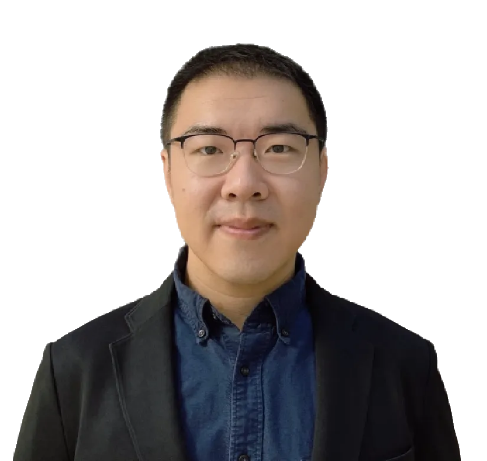
Haotian Chen
格拉斯哥大學
【研討嘉賓】

Sukho Song
瑞士聯邦材料科學實驗室
直播時間:2024年10月11日(周五)20:00-21:30直播平臺:科學網APPhttps://weibo.com/l/wblive/p/show/1022:2321325088295842611......
直播時間:2024年9月23日(周一)上午9:00——12:00直播平臺:科學網APPhttps://weibo.com/l/wblive/p/show/1022:232132507998731226......
直播時間:2024年9月19日(周四)19:00直播平臺科學網APP(科學網微博直播間鏈接)https://weibo.com/l/wblive/p/show/1022:232132507699888......
直播時間:2024年9月2日(周一)19:00——20:00直播平臺:科學網APPhttps://weibo.com/l/wblive/p/show/1022:23213250705422930411......
直播時間:2024年8月30日(周五)20:00——21:30直播平臺:科學網APPhttps://weibo.com/l/wblive/p/show/1022:2321325073131739152......
直播時間:2024年9月1日(周日)上午8:00——9:00直播平臺:科學網APP(科學網微博直播間鏈接)https://weibo.com/l/wblive/p/show/1022:23213250......
直播時間:2024年8月20日(周二)20:00——22:00直播平臺科學網APPhttps://weibo.com/l/wblive/p/show/1022:23213250694463......
直播時間:2024年8月21日(周三)18:00——20:00直播平臺:科學網APPhttps://weibo.com/l/wblive/p/show/1022:2321325067673620054......
直播時間:2024年7月23日(星期二)20:00—22:00直播平臺:科學網APP(科學網微博直播間鏈接)https://weibo.com/l/wblive/p/show/1022:2321325......
原文地址:http://news.sciencenet.cn/htmlnews/2024/7/525979.shtm直播時間:2024年7月9日(周二)19:00直播平臺:科學網APP(科學網微博直播......